Sleep Technology & Ergonomics
Inside an Organic Hybrid Mattress: Materials, Layers and Flexibility
A mattress can look simple from the outside and still contain a surprisingly complex mix of materials beneath its cover. In an organic hybrid, natural fibres, latex and supportive coils may work together to shape the feel of the bed—and how it behaves when an adjustable base lifts the head or feet.
Knowing what each layer is designed to do makes it easier to compare construction details without getting lost in labels. It can also help you ask a practical question before choosing a mattress: will this particular design move comfortably and safely on the adjustable base you plan to use?
First, what does “hybrid” actually mean?
In mattress language, “hybrid” generally describes a design that combines different kinds of support or comfort materials. A common arrangement pairs a coil support system with one or more comfort layers above it. Those upper layers might include natural latex, wool, cotton or other fibres, depending on the model. The exact recipe varies, which is why the word hybrid alone can’t tell you how a mattress will feel or whether it will suit an adjustable base.
The word “organic” needs its own close reading. It may refer to particular materials, such as certified organic cotton, rather than every component in the mattress. A product’s certifications and specifications are the place to check which materials are covered and what the certification actually applies to. Terms such as natural, organic and chemical-free are not interchangeable guarantees of an identical construction.
Think of the mattress as a small, carefully arranged system. The cover meets the sleeper; cushioning layers influence surface feel; deeper layers distribute support; and the base underneath provides the foundation. When the foundation articulates, each part of the mattress has to respond to movement in a way the maker considers suitable. That response depends on the full design—not simply on whether one layer is flexible.
A layer-by-layer look beneath the cover
The cover: the first point of contact
The cover, sometimes called the ticking, is the fabric surrounding the mattress. Cotton is a familiar choice in natural-material designs, while some covers combine fibres or use a stretch-knit construction. The cover affects the first impression of the surface, including how much it stretches as the sleeper changes position.
For an adjustable mattress, the cover is one detail among many. A fabric that stretches does not, by itself, establish that the whole mattress is appropriate for articulation. Look for the manufacturer’s guidance about the complete model, and check whether the care instructions or warranty mention use on an adjustable base.
Natural fibres: comfort, quilting and moisture management
Wool and cotton can appear in quilted layers or as part of the mattress cover. Depending on their placement and amount, fibres may influence surface cushioning, warmth and the overall character of the bed. Wool is also used in some constructions as part of a fire-barrier approach. The precise role depends on the product, so the specification sheet is more useful than a broad material label.
Fibre layers may compress differently from foam or latex. Their thickness, density and quilting pattern can all influence the feel over time. In an articulated setup, those layers bend along with the mattress. Ask the maker whether the particular combination is intended to flex repeatedly, especially if the mattress has a substantial quilted top or a firm, structured border.
Latex: responsive, resilient and not one-size-fits-all
Latex is used in comfort layers and support cores. It is often described as responsive: rather than feeling like a slow-sinking surface, it may compress and spring back as pressure changes. The experience depends on the latex formulation, its firmness, thickness and position in the mattress.
Natural latex and synthetic latex are not the same thing, and some mattresses use blends. Even within natural latex designs, manufacturing methods and layer arrangements can differ. A thick latex core may be flexible, but mattress flexibility is a property of the whole construction. Edges, quilting, adhesives and any additional support materials matter too.
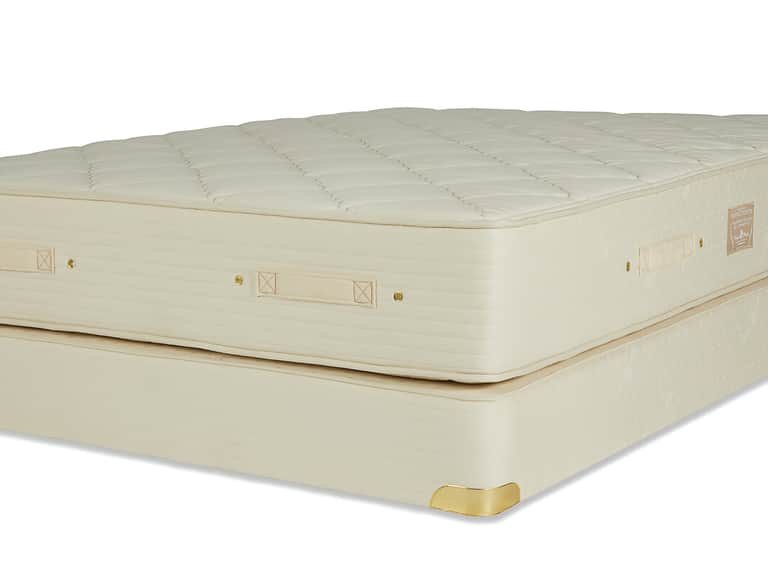
For a useful example of the information a detailed specification can provide, the Royal-Pedic Natural Latex Quilt-top Mattress describes an approximately eight-inch latex core, with a firm latex layer and a medium layer above it, surrounded by wool and cotton. Its published details state that it may be used on an adjustable bed base. That is a model-specific statement, not a blanket endorsement of every latex mattress for every base.
Coils: support with a different kind of movement
Coils form the support system in many hybrids. They can be arranged in different ways, and the type, gauge, number and layout of the springs may influence the mattress’s feel and how it distributes support. Some designs use individually wrapped coils; others have different configurations. These details are worth checking rather than assuming all coil systems respond alike.
When a base bends, the coil unit must move with the mattress. Some coil constructions may be designed to articulate; others may have restrictions or require a particular style of foundation. A mattress can feel flexible when pressed by hand and still be unsuitable for a powered base, so a hands-on impression is not a substitute for the manufacturer’s compatibility guidance.
Comfort layers and transitions
Between the surface and the support system, a mattress may include additional layers intended to alter cushioning or help the materials work together. These might be latex, fibres or other materials. Their thickness and firmness can change how readily a mattress bends, and how evenly it responds as the head or legs rise.
Layer order matters. Two mattresses can list similar materials yet feel quite different because those materials are arranged differently. A comfort layer placed above a firm core does not behave exactly like the same material used throughout the support system. When comparing options, look for a layer diagram or a written description that gives thicknesses and positions, not just a materials list.
Why flexibility matters on an adjustable base
An adjustable base changes the shape of its support surface, typically by raising the head, the foot or both. The mattress has to follow that movement without being forced beyond what its construction allows. If a mattress is too rigid for the base, the result may be poor alignment, uncomfortable bunching or undue strain on the mattress. The exact outcome depends on the mattress and base, which is why compatibility should be confirmed before use.
Flexibility is not the same as floppiness. A mattress still needs to retain its intended support and remain properly positioned while the base moves. Its comfort layers, core, perimeter construction and cover all contribute to how it bends and settles. A very thick or tightly quilted build may respond differently from a more streamlined design, but thickness alone cannot determine suitability.
Split configurations add another practical consideration. Some adjustable systems move a single mattress in unison; others let each side move independently, often with separate mattresses. Check the mattress dimensions, base configuration and the manufacturer’s instructions together. A size that fits the bedroom may not be the correct format for a split base.
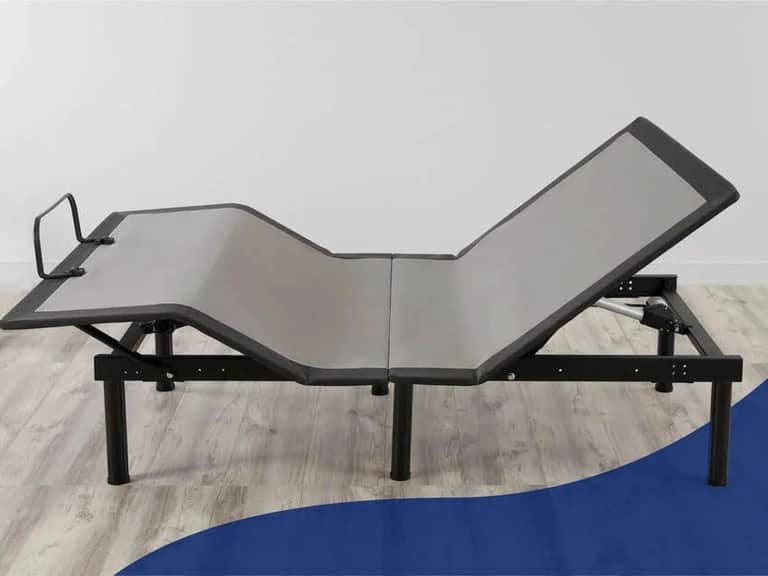
If you are comparing bases as well as mattresses, note the specific model and its requirements. For instance, the site’s Adjustable Base 2023 is described as having a wireless remote and multiple position presets. Those features describe the base, but they do not establish compatibility with every mattress. The mattress maker’s guidance and the base maker’s instructions need to agree.
How to read mattress specifications without getting overwhelmed
Specifications can look dense, but a few focused questions make them easier to use. Start with the exact model name and size. Manufacturers sometimes sell variations under a similar name, and a compatibility statement for one version should not automatically be applied to another. Then look for a clear materials breakdown and a direct answer about adjustable-base use.
- What materials are in each layer? Look for the cover, comfort layers, support core and any fire-barrier materials.
- How thick are the layers? Thickness does not determine flexibility by itself, but it helps you understand the construction.
- What supports the mattress? Identify whether the core uses coils, latex or another support system, and whether the manufacturer describes how it is intended to be used.
- Is adjustable-base use explicitly permitted? Seek a statement for the exact mattress model rather than relying on general claims about latex or hybrids.
- Are there base requirements? Check for restrictions on the style of base, slat spacing, platform support, position range or split configuration.
- What does the warranty say? Review whether use on an adjustable base is covered and whether there are installation or support requirements.
- How should the mattress be handled? Find out whether turning, rotating or moving it is recommended, and whether the construction has orientation instructions.
If the details are unclear, contact the mattress manufacturer or a knowledgeable retailer with the exact model and base information. Ask for the answer in writing when possible, especially if the warranty language is difficult to interpret. It is better to pause before setup than to discover that a seemingly small requirement affects coverage or safe use.
Feel, airflow and responsiveness: what materials can—and can’t—tell you
Material names offer clues, not a guaranteed description of personal comfort. Latex may feel buoyant to one sleeper and firm to another. A fibre-rich quilt can provide a different surface impression from a thinner, more direct comfort layer. Coil systems also vary considerably. Construction, firmness, body shape and sleep position all influence how a mattress feels in everyday use.
Airflow is similarly nuanced. A material’s breathability may be one factor in how the bed feels, but the complete system matters: covers, quilting, layer density, room conditions and bedding all play a part. A product description that calls a mattress breathable does not promise a particular temperature experience for every sleeper.
Responsiveness describes how a surface reacts as pressure shifts. Some people prefer a mattress that adjusts quickly when they move; others like a more cushioned feel. On an adjustable base, you may notice that your body contacts the bed differently as the angle changes. This is a comfort consideration, not a medical treatment claim. If you have a health concern or are relying on a particular sleeping position for a medical reason, ask a qualified healthcare professional for guidance.
Compatibility checks before the first lift
Before placing an organic hybrid mattress on a powered base, confirm that both manufacturers approve the combination. Check the base’s instructions for its intended mattress types, weight limits and operating conditions. Then compare those requirements with the mattress specifications and warranty. A statement that a mattress can be used on an adjustable base is useful, but the base must also suit the mattress’s size and construction.
Once compatibility is confirmed, follow the setup instructions carefully. Make sure the mattress is correctly oriented and centred, and that bedding, cables or other objects will not obstruct the moving sections. Test the base gradually and observe how the mattress follows its movement. Stop if you notice unusual shifting, binding, creasing or sounds, and consult the relevant instructions or support team rather than forcing the mechanism.
Keep the remote and electrical components in accordance with the base maker’s safety guidance. Do not exceed the stated limits, modify the frame or place objects where they could interfere with movement. If the setup includes two independently moving sides, follow the manufacturer’s instructions for synchronisation and mattress placement.
Bedding and everyday care still count
The mattress is only one part of the setup. Fitted sheets need enough depth and stretch to stay in place as the bed changes angle. Bedding that is too tight can pull at corners or feel restrictive; bedding that is too loose may shift. For split configurations, check whether separate fitted sheets are needed for each side.
A mattress protector can help guard against moisture and everyday marks, but it should fit the mattress properly and remain secure during articulation. Follow its care instructions and confirm that its construction does not interfere with the mattress maker’s requirements. Pillow height may also feel different when the head section is raised, so comfort can be assessed in the positions you actually plan to use.
Care advice varies. Some mattresses are designed to be rotated, some have a fixed orientation, and others include specific instructions for cleaning or handling. Avoid folding, bending or lifting a mattress in a way the manufacturer does not permit. Even a flexible design has limits, and careful handling helps preserve its intended construction.
Common assumptions worth leaving at the showroom
“If it contains latex, it must work on an adjustable base.” Not necessarily. Latex can be flexible, but the complete mattress design and the manufacturer’s instructions determine whether a particular model is approved.
“Organic means the whole mattress is made from organic materials.” Not automatically. Check which materials are certified, what the certification covers and whether the statement applies to the full product or selected components.
“A hybrid is too rigid to articulate.” There is no single hybrid construction. Coil systems and layer arrangements vary, so some models may be intended for adjustable bases while others may not be.
“A mattress that bends by hand is compatible.” Hand pressure is not a reliable test of repeated movement under the weight of a sleeper. Use the maker’s explicit compatibility guidance instead.
“All adjustable bases move the same way.” Bases differ in articulation, frame design, size and setup requirements. Compatibility should be checked for the specific combination, not guessed from the general category.
A practical decision checklist
Before choosing an organic hybrid mattress for an adjustable bed, bring the product names and specifications together. The following checklist turns a broad search into a manageable comparison:
- Write down the exact mattress model, construction and size.
- Identify the materials and thicknesses of the cover, comfort layers and support core.
- Find an explicit statement about adjustable-base compatibility.
- Read both the mattress warranty and the base instructions for restrictions.
- Confirm whether the arrangement is single, split or independently adjustable.
- Check the required foundation, weight limits and setup guidance.
- Choose fitted bedding that can move with the mattress without pulling or bunching.
- Save product specifications and any written confirmation for future reference.
These steps may not predict whether a mattress will be your personal favourite. They do help establish whether the construction and base are intended to work together, which is a sensible starting point before comparing feel, firmness or finish.
The bottom line: read the whole build
An organic hybrid mattress is more than a list of appealing materials. Cotton, wool, latex and coils each have different characteristics, but their arrangement is what creates the finished mattress. Layer thickness, construction details and the support system all influence how the bed feels and how it may respond when an adjustable base changes shape.
That makes the most useful question a specific one: is this exact mattress designed for this exact kind of base? Look beyond broad labels, check the compatibility statement and warranty, and follow the setup instructions from both makers. With those details in hand, you can compare materials and comfort with greater confidence—and make a choice based on the whole mattress, not just the name on its cover.